Buying Property in Bulgaria: Process, Taxes and What to Watch Out For
17 August 2026
Bulgaria has undergone two changes over the past two years that have fundamentally simplified property purchases for Slovaks and Czechs: from 1 January 2025, it is a full member of Schengen, and from 1 January 2026, it uses the euro (the exchange rate was fixed at 1 € = 1.95583 BGN). Trips to the Sunny Beach are now made on an ID card, and you pay for an apartment with a regular SEPA transfer in euros from a Slovak or Czech account. EU citizens additionally buy apartments and houses in their own name, without permits and without setting up a company. In this guide we will go through the entire process, costs and risks to watch out for.
Can a foreigner buy in Bulgaria?
Yes. EU citizens buy apartments and houses with land in their own name and in full ownership — this is similar to freehold, without permits and without the need to set up a company. A Bulgarian limited company (so-called EOOD/OOD) is necessary only for non-EU citizens who want to own land. Restrictions remain for agricultural and forest land — conditions apply there (for example, long-term stay in Bulgaria) also for EU citizens. However, this does not apply to apartments and building plots in resorts.
When buying an apartment, you acquire a unit plus an ideal share in the common areas and usually also in the land. An important detail: some complexes are built on someone else's land with only a "right to build" (pravo na strojež). A lawyer must therefore verify before signing exactly what you are buying.
Step-by-step purchase process
- Reservation agreement and reservation fee — approximately 2,000 – 5,000 €. The property is withdrawn from the offer.
- Preliminary agreement (predvaritelen dogovor) within 2 – 4 weeks: price, payment schedule, deadlines and penalties. When buying under construction (off-plan), it is key to tie payments to construction milestones — Acts 14, 15 and 16.
- Final transfer by notarial deed (notarialen akt) with a notary in the district of the property. The notary verifies ownership and encumbrances.
- Registration in the property register (Agentúra po vpisvanijata) submitted by the notary. This is followed by tax registration of the property with the municipality (within 2 months) and registration of the foreign buyer in the BULSTAT register — both are usually handled by the lawyer.
A finished property can be transferred within 4 – 8 weeks. Remote purchase is completely normal: you only need a power of attorney signed by a notary in Slovakia or the Czech Republic with an apostille and official translation; the entire process is then conducted by a Bulgarian lawyer.
Fees and taxes when buying
> The Globeya Full Service is added to the developer's or seller's price. It covers the whole service, legal work included — a lawyer, legal checks and contract translation. It is paid once, on signing the contract, together with the down payment. Taxes and official state fees are not part of it — you will find the main ones below; we tell you the exact amounts for your specific project in advance and go through all the terms with you in a consultation.
- Local property transfer tax: determined by the municipality in the range of 0.1 – 3%. The municipality of Nesebar (to which Sunny Beach and Sveti Vlas belong) has 3% — calculated from the price in the contract or from the tax valuation, whichever is higher.
- Registration in the register: 0.1%.
- New developments from the developer: the price usually already includes 20% VAT — verify this in the contract.
Annual owner costs
- Property tax: 0.01 – 0.45% of the tax valuation, which is usually lower than the market price — for a typical apartment approximately tens to lower hundreds of euros per year.
- Waste disposal fee: similar range, levied by the municipality together with the tax.
- Resort management fee (so-called taksa poddražka): in complexes with a pool, reception and security approximately 5 – 15 €/m² per year — for a 60 m² apartment approximately 300 – 900 € per year. It is paid even if you don't use the apartment.
- Utilities: depending on consumption; low with seasonal use.
Rental and yield
A foreigner may rent without restriction. However, short-term rental requires categorization, i.e. registration of accommodation with the municipality, reporting guests (ESTI system) and payment of local accommodation tax — approximately 0.10 – 1.50 € per night depending on the municipality and category.
Income tax from rental for non-residents is 10% (flat rate); for non-residents, it is usually withheld from gross income without standard deductions — the exact regime will be set by a tax advisor, sources vary.
And the yields? Gross yield in Burgas is approximately 5% per year (Global Property Guide, 2025). On the Sunny Beach, short-term rental can bring more, but the season is short (June – September) and outside it occupancy is minimal — don't expect full-year yield.
Residence and visas
Buying property in itself does not grant residence — for EU citizens it is not required anyway. You can stay in Bulgaria indefinitely; when staying longer than 3 months, you register with the foreigner's police (certificate of residence for an EU citizen) and property ownership will serve as proof of address. Travel is on an ID card, Bulgaria is in Schengen. Investment "golden" programs are not relevant for clients from Slovakia and the Czech Republic.
Financing
Bulgarian banks lend to foreigners, but cautiously: LTV approximately 50 – 70%, term often up to 20 years, rates in euros approximately 3.5 – 5% (2025) and many income documents required. In practice, therefore, most clients choose one of three ways:
- cash payment,
- developer payment plan — typically 30% upon contract and the rest according to construction stages, often interest-free until handover,
- loan in Slovakia or the Czech Republic secured by domestic property (American mortgage, loan for anything) — Bulgarian property is usually not accepted as collateral by a Slovak or Czech bank.
Risks and what to watch out for
- Off-plan and Acts: tie payments to construction milestones — Act 14 (rough construction), Act 15 (construction completed), Act 16 (handover, permission to use). Pay the final installment only after Act 16; without it, the property cannot be legally used.
- Developer verification: land ownership, building permit, encumbrances and history of completed projects. Developers often finance construction with a mortgage on the land — in the contract your unit must be exempted from the pledge.
- Management agreement: fee amount, its indexation, any obligation to rent through the developer.
- Full price in the deed: state the full purchase price in the notarial deed. Undervaluation is an old market vice and a risk for future sale.
- Sunny Beach: large offer of older complexes means worse liquidity when selling and often neglected maintenance. The quality of the management company is key to property value.
Sale in the future
Profit from a sale is taxed at 10% of the price difference. However, there is an exemption: 1 residential property per year after more than 3 years of ownership (and up to 2 properties after 5 years). Residents of the EU/EEA — including Slovaks and Czechs — can apply it just like Bulgarians. The property can also be sold remotely through a power of attorney.
Frequently asked questions
Do I need a Bulgarian company as a Slovak or Czech? No. EU citizens buy an apartment or house in their own name.
Do I have to travel to Bulgaria when buying? No. You only need a power of attorney with an apostille signed at home with a notary; your Bulgarian lawyer will deliver the signature.
In which currency do I pay? In euros — Bulgaria uses the euro from 1 January 2026. The transfer is made normally from a Slovak or Czech account (SEPA).
What is Act 16? Handover decision. Only when it is issued is the building legally completed and habitable; do not pay the final installment before it is issued.
How much does an apartment cost me per year if I don't live in it? Tax and waste approximately tens to lower hundreds of euros, resort management approximately 5 – 15 €/m² — in total for a 60 m² apartment approximately 400 – 1,000 € per year.
Can I rent an apartment through Booking or Airbnb? Yes, but the apartment must have categorization (registration) with the municipality, guests must be reported and accommodation tax must be paid; from income you pay 10% tax in Bulgaria. Expect a short season.
Next step
Each complex on the coast is different — from the quality of management to whether it stands on its own land. If you are considering buying in Bulgaria, we are happy to show you on a free consultation which projects we would buy ourselves, and answer questions about your specific situation.
In the meantime, you can view current offers in Bulgaria.
Status of information: August 2026. General information, not legal or tax advice.
Properties in this country
Listings — Bulgaria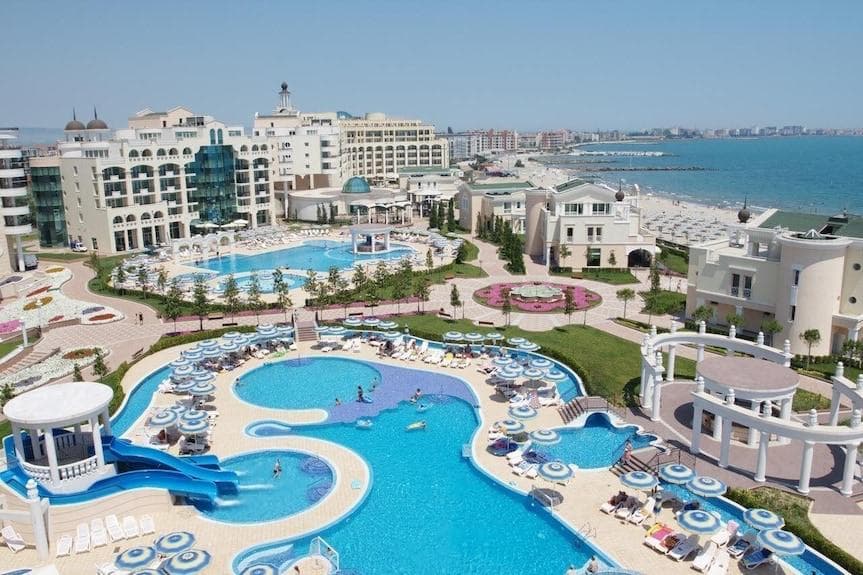 Bulgaria · PomorieCompleted
Apartment in Sunset Resort Pomorie
Elegant 2-bedroom apartment at the seaside Sunset Resort in Pomorie, Bulgaria, combining comfort, excellent location and rental investment potential.
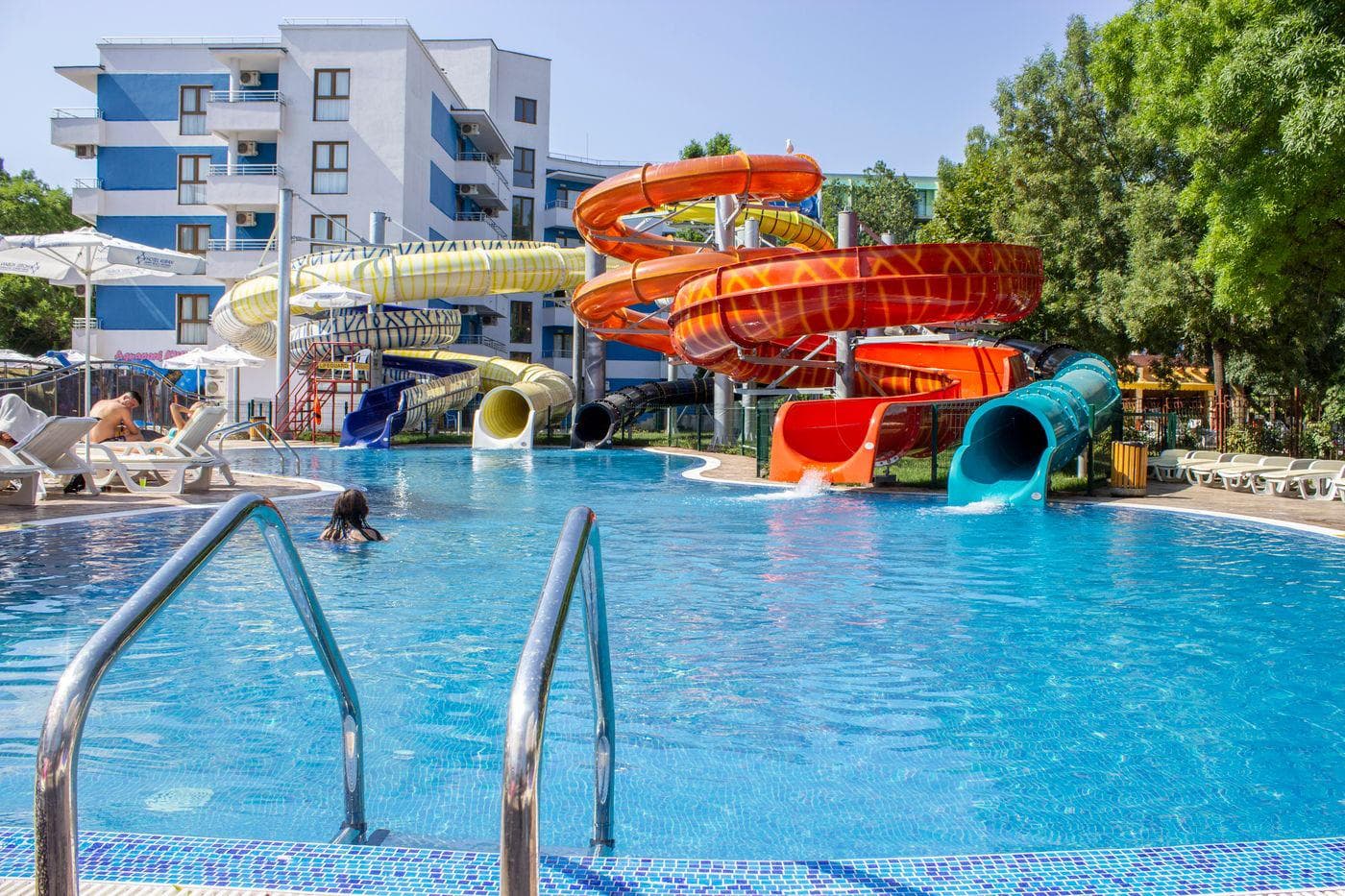 Bulgaria · Slnečné pobrežieCompleted
Apartment in Kuban complex, Sunny Beach
Spacious studio apartment in the iconic Kuban building at Sunny Beach, just 100m from the sandy beach and in the heart of the resort.
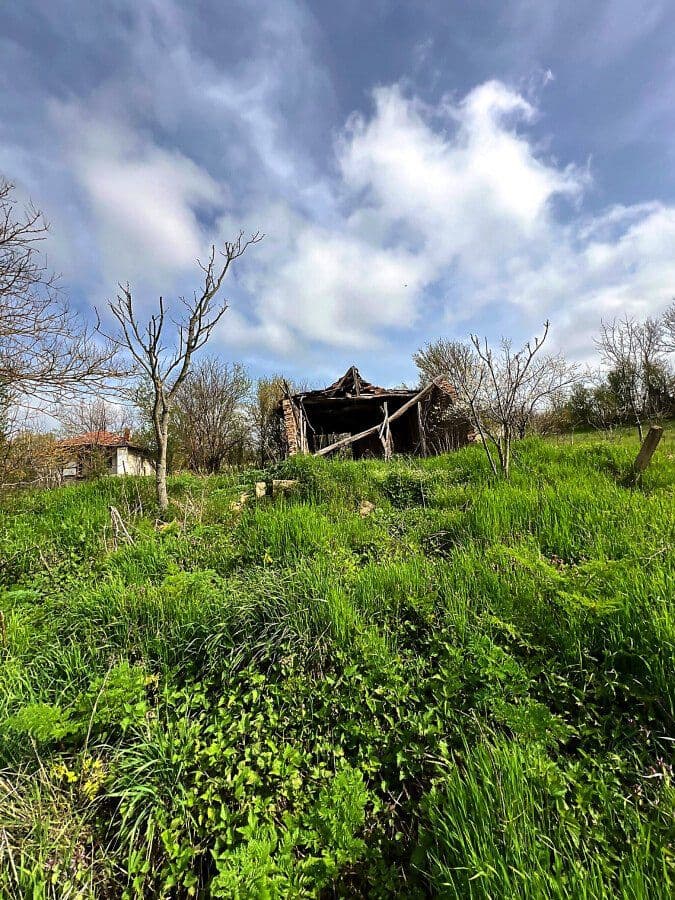 Bulgaria · Svetlina
House with land 2,815 m² near Svetline
House with approximately 50 m² of living space on a 2,815 m² plot in the quiet village of Svetline near Burgas, needing complete renovation with great potential for garden, pool or summer kitchen.