Buying Property in Croatia: Process, Taxes and Rental
17 August 2026
Croatia is the most natural foreign destination for Slovak and Czech buyers: the Adriatic within driving distance, no visas or borders, payments in euros, and you buy property under exactly the same conditions as a Croatian. At the same time, the Croatian market has its own specifics — land registries, coastal zone, new rules for tourist rental — which determine whether the purchase will be problem-free. This guide brings together everything essential in one place.
Can a foreigner buy in Croatia?
Yes, and more easily than most people think. EU citizens, including Slovaks and Czechs, buy property in Croatia under the same conditions as Croatians — without ministerial permission and without reciprocity requirements. Ownership is full (equivalent to freehold), no leasehold is used. Without restrictions are apartments, houses and building plots; and since 1 July 2023, EU citizens can also buy agricultural land, as the moratorium has ended.
There is one exception that applies to everyone, including Croatians: the so-called "pomorsko dobro" — the coastal zone, i.e., beaches, piers and the coastal strip — cannot be owned, only used on the basis of a concession. And for apartments, it is important that the building is subdivided into units, i.e., legally divided into separate properties. Without this, an apartment cannot be registered in the cadastre.
The buying process step by step
- OIB (tax number). The first step is to obtain a Croatian tax number OIB — at the tax office or through an authorised representative. It is free and takes from a matter of minutes to a few days.
- Legal verification. The basis is an extract from the land register (vlasnički list), which is the only proof of ownership. Encumbrances, building permits (građevinska dozvola), use permits (uporabna dozvola) and energy certificates are checked.
- Preliminary contract. The preliminary contract is concluded with a deposit (earnest money), usually 10% of the price. It works both ways: if the buyer withdraws, the deposit is forfeited; if the seller withdraws, they refund double.
- Main purchase agreement. It is prepared by a lawyer; a notary verifies the seller's signature — full notarial form is not mandatory. The seller issues a tabular statement, i.e., consent to register the property to the buyer.
- Registration in the land registry. The application for registration in the "zemljišne knjige" must be submitted to the court as soon as possible. Transfer tax is paid within 15 days of receiving the tax authority's decision — the notary reports the sale to the tax authority.
The entire process takes an EU citizen approximately 2 – 8 weeks from signature to registration. Remote purchase is completely common: a power of attorney verified by a Slovak or Czech notary with apostille, or arranged at the Croatian embassy, is sufficient.
Fees and taxes at purchase
> The Globeya Full Service is added to the developer's or seller's price. It covers the whole service, legal work included — a lawyer, legal checks and contract translation. It is paid once, on signing the contract, together with the down payment. Taxes and official state fees are not part of it — you will find the main ones below; we tell you the exact amounts for your specific project in advance and go through all the terms with you in a consultation.
- New building from developer (VAT payer): 25% VAT is already included in the list price and transfer tax is not then paid.
Annual costs of ownership
From 1 January 2025, Croatia has a new annual property tax (porez na nekretnine): 0.60 – 8.00 €/m² of useful floor area per year, with the specific rate set by the municipality. Recreational properties of foreigners are subject to it; exempt are permanent residence and long-term rental of at least 10 months per year. Coastal tourist municipalities often have the top rates, even 8 €/m².
To this must be added the municipal fee to the municipality (komunalna naknada), which is paid monthly according to square metres and amounts to roughly tens of euros; in apartment buildings a maintenance fund (pričuva) and in resorts management or pool fees — depending on the project, roughly hundreds to lower thousands of euros per year. Utilities and water come out at normal use approximately 100 – 200 € per month.
Rental and returns
An EU citizen may rent out their Croatian property, but short-term tourist rental has clear rules: you need categorisation (rješenje o kategorizaciji) from the county office, guest registration in the eVisitor system and collection of tourist tax. A natural person can rent this way up to 10 rooms or 20 beds.
Moreover, the rules are getting stricter. From 1 January 2025, a new landlord in an apartment building needs written consent of two-thirds of co-owners (granted for a minimum of 5 years) and from mid-2026, each unit must have a registration number — without it, Booking and Airbnb cannot advertise it. Anyone planning rental should verify these conditions before purchase.
Taxation is favourable for a non-resident from the EU: in tourist rental, a flat tax per bed is paid, set by the municipality according to destination development — 20 – 300 €/bed/year, with the highest band 100 – 300 € applying to top coastal destinations. A small membership fee to the tourist association is added. The flat rate applies up to a turnover of 60,000 € per year (threshold increased from 1 January 2025 from 40,000 €) and from 1 January 2025, non-residents from the EU are treated equally to domestic landlords. In long-term rental by a natural person, tax of 12% on income reduced by 30% standard deductions is paid, effectively therefore 8.4%.
One realistic warning: returns are highly seasonal on the Adriatic (June – September) and the specific percentage depends on location and occupancy. Guaranteed figures do not exist — and if someone promises them, don't believe them.
Residence and visas
Buying property gives no special residence rights, and Croatia has no "golden visas". For Slovaks and Czechs, however, this is irrelevant: Croatia is in the EU, Schengen and eurozone, so entry is free and residence over 90 days just needs to be registered (prijava privremenog boravka) — with your own property it is a formality.
Financing
Croatian banks (Zagrebačka banka, PBZ and others) lend to non-residents from the EU, but on stricter terms: LTV approximately 50 – 70%, i.e., own funds 30 – 40%, the rate is usually slightly higher than for domestic borrowers and maturity 15 – 25 years; banks discount foreign income when assessing.
In practice, therefore, most clients choose another route: payment in cash, developer instalment plan during construction, or a loan from a Slovak or Czech bank secured by domestic property (bridge loan or refinancing) — often this is the simplest solution.
Risks and what to watch out for
- Land register vs. cadastre. Discrepancies between records, unresolved inheritances or multiple co-owners are a real problem in Croatia. Buy only with a clear extract.
- Illegal and subsequently legalised buildings (ozakonjenje). Always request building and use permits. Without an use permit, there is a risk of registration problems, rental issues and difficulties with future resale.
- Coastal zone. A "first line to the sea" plot may partly fall into the unownable coastal zone — the boundary must be verified.
- Off-plan projects. Croatia does not have a mandatory separate account or statutory bank guarantee for buyers. Key therefore is verification of the developer (history, financing, valid building permit), payments by stages according to construction progress and registration of preliminary notice (predbilježba) in the land register. If possible, request a bank guarantee for deposits.
- Lawyer. Always have your own lawyer — not the seller's or agent's lawyer. We arrange one as part of the Globeya Full Service.
Selling in the future
Croatia taxes gains for non-residents at a rate of 24% (as of 2026) — but only if you sell within 2 years of acquisition. After 2 years of holding, a natural person's gain is exempt from tax; also exempt is the sale of one's own permanent residence. Watch out for one rule: if you sell more than 3 properties of the same type within 5 years, it is treated as trading and taxed regardless of the holding period. Between Slovakia/Czech Republic and Croatia, a treaty to prevent double taxation applies: the gain is taxed in Croatia and at home is taken into account according to the treaty.
Frequently asked questions
Do I need Croatian citizenship or residence to buy? No. A valid ID and OIB (tax number) are sufficient, which can be arranged remotely via power of attorney.
If I buy a new building, do I pay further tax? The developer's price already includes 25% VAT; 3% transfer tax is then not paid. The Globeya Full Service is added to the developer's price (it includes a lawyer); we tell you the registration fees in advance.
Can I rent out an apartment to tourists over the summer? Yes, after categorisation and registration. In an apartment building, you need consent from 2/3 of co-owners from 2025 and from mid-2026 a registration number for the unit for advertising.
How much is the annual property tax? 0.60 – 8 €/m² per year depending on the municipality; recreational properties on the coast are usually in the upper part of the band. Exempt is year-round long-term rental (minimum 10 months).
Can you buy remotely? Yes, commonly — power of attorney with notarial certification and apostille, a lawyer signs and registers for you.
When can I sell without tax on the gain? After 2 years of holding (natural person, maximum 3 properties in 5 years); if sold earlier, the gain is taxed at 24%.
Next step
If you are considering buying on the Adriatic, we will gladly go through a specific location, budget and legal steps with you in a free consultation. With no obligation — you will leave with a clear idea of whether and how the purchase makes sense in your situation.
In the meantime, you can check out current listings in Croatia.
Information status: August 2026. Indicative information, not legal or tax advice.
Properties in this country
Listings — Croatia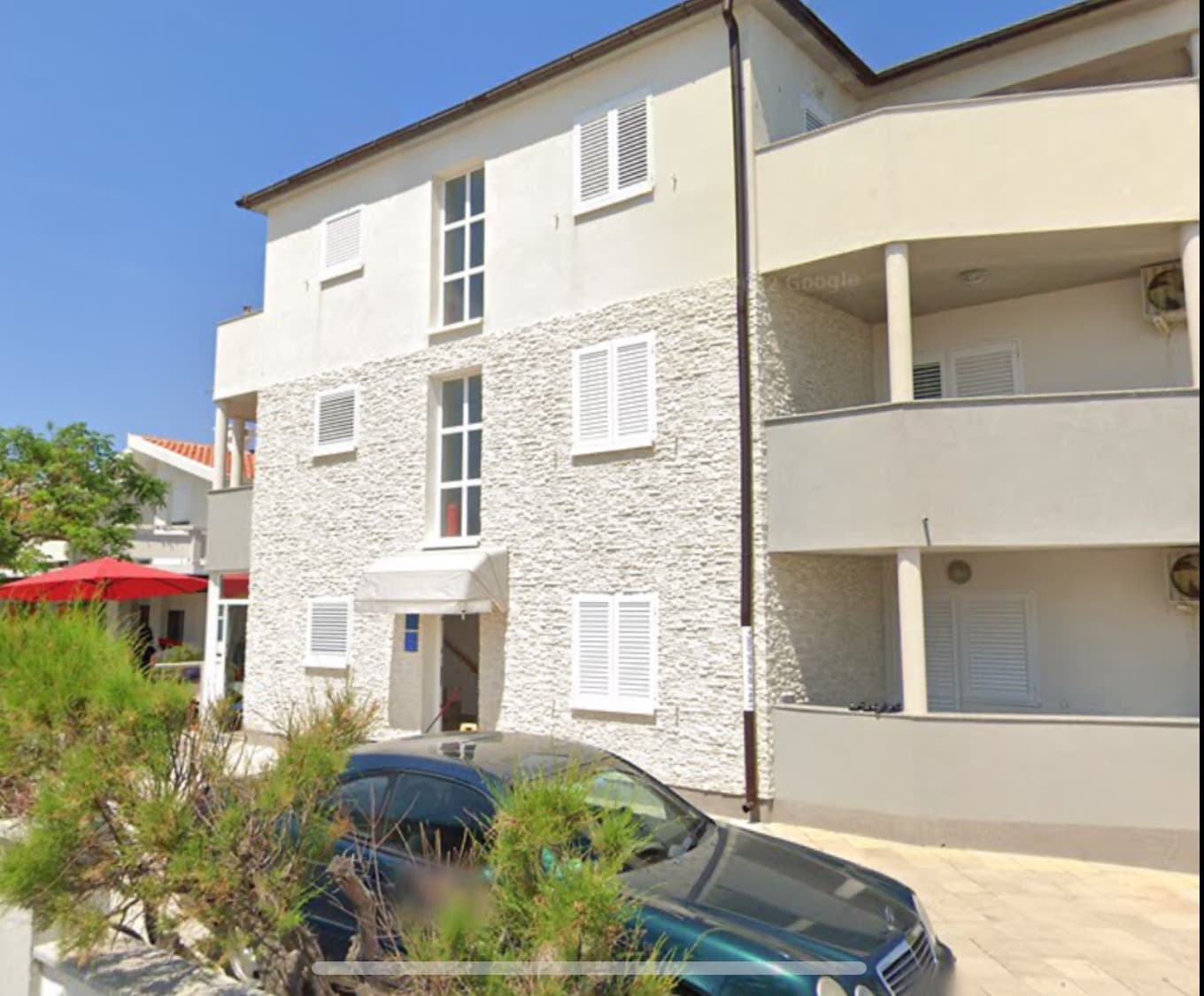 Croatia · ostrov VirCompleted
Studio apartment by the sea, Vir island
1-bedroom studio apartment in Croatia on Vir island near Zadar, 25 km away, 10 m from beach, fully equipped and ready for rental.
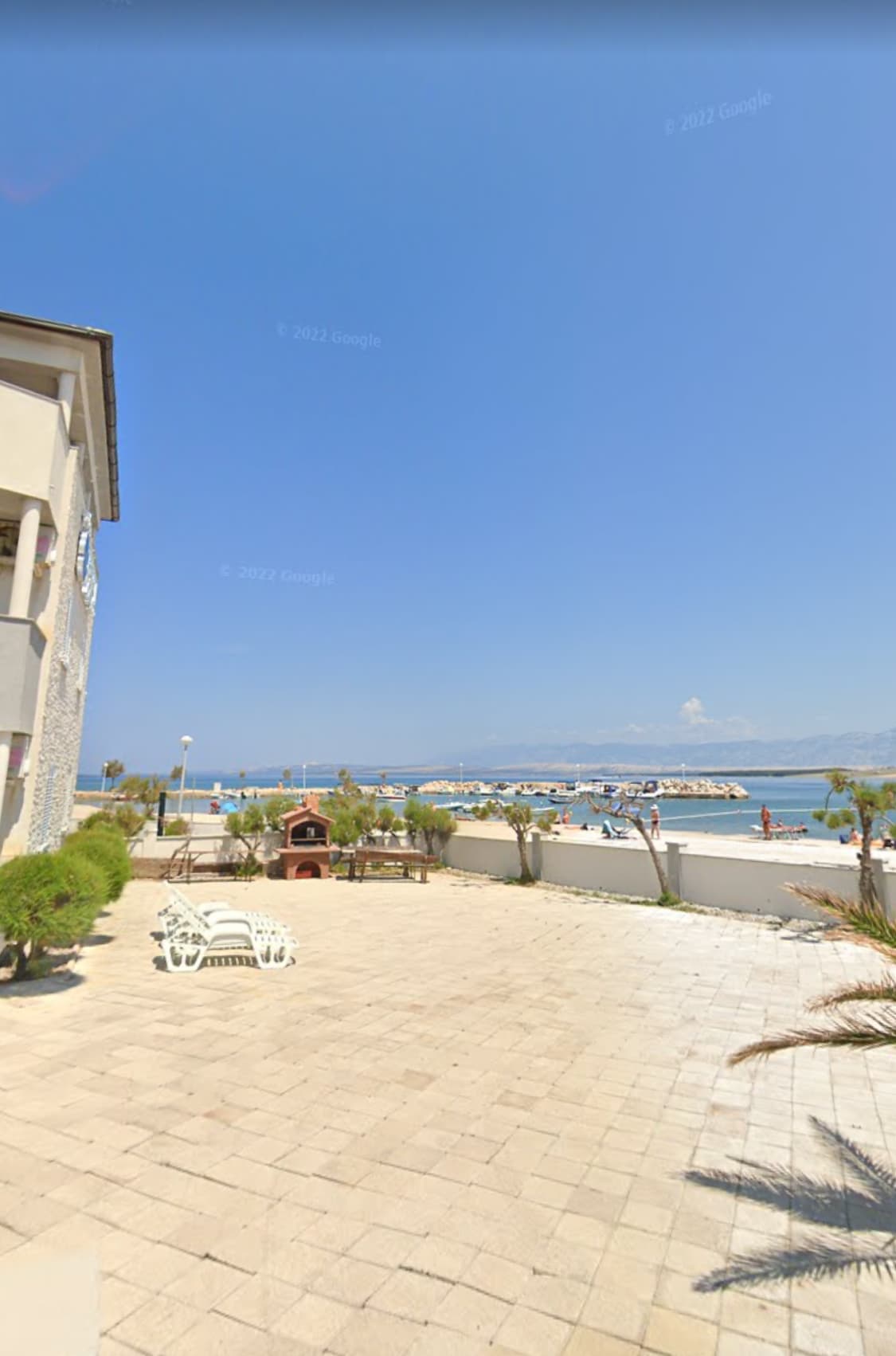 Croatia · VirCompleted
3-bedroom apartment on Vir island near Zadar
Fully equipped 3-bedroom apartment (2 bedrooms) for 5-6 people on the first line by the sea on Vir island, 10 m from the beach, with sea view terrace.
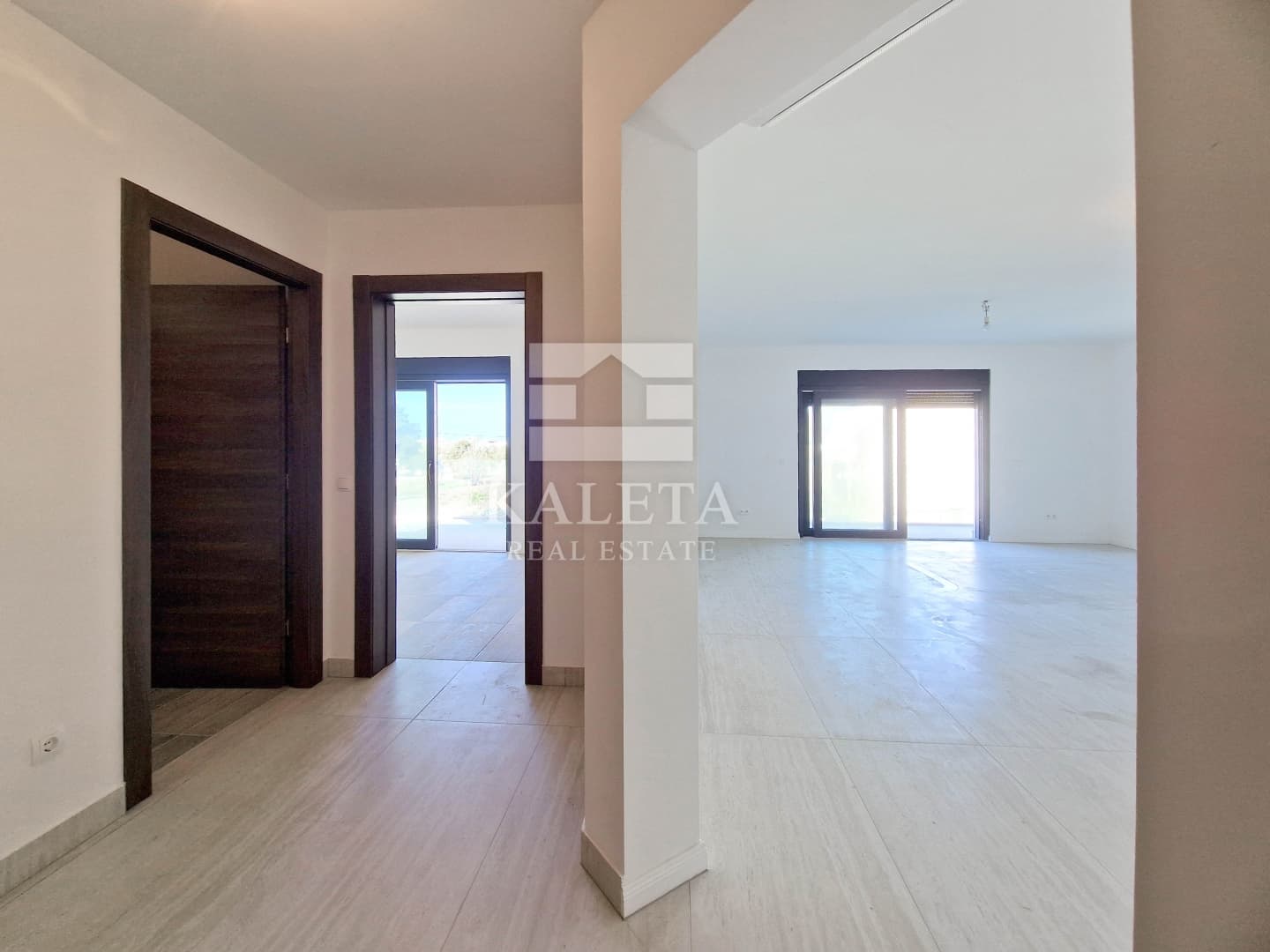 Croatia · PrivlakaCompleted
New-build 2-bedroom near the beach — Privlaka
Well-equipped new building near the sea with two apartments, one parking space per unit, energy-efficient floor heating.