Buying Property in Oman: Freehold, Taxes and Residence
17 August 2026
Oman is a quieter alternative to Dubai: entry costs when buying are lower (3% versus 4% plus fees), the market is resort-based and less hectic, and — which is decisive for many buyers — ownership in an approved zone entitles the owner and immediate family to a residence visa. In this guide you will find exactly where Slovaks or Czechs can buy in Oman, how the process works, how much it all costs and what to watch out for.
Can a foreigner buy in Oman?
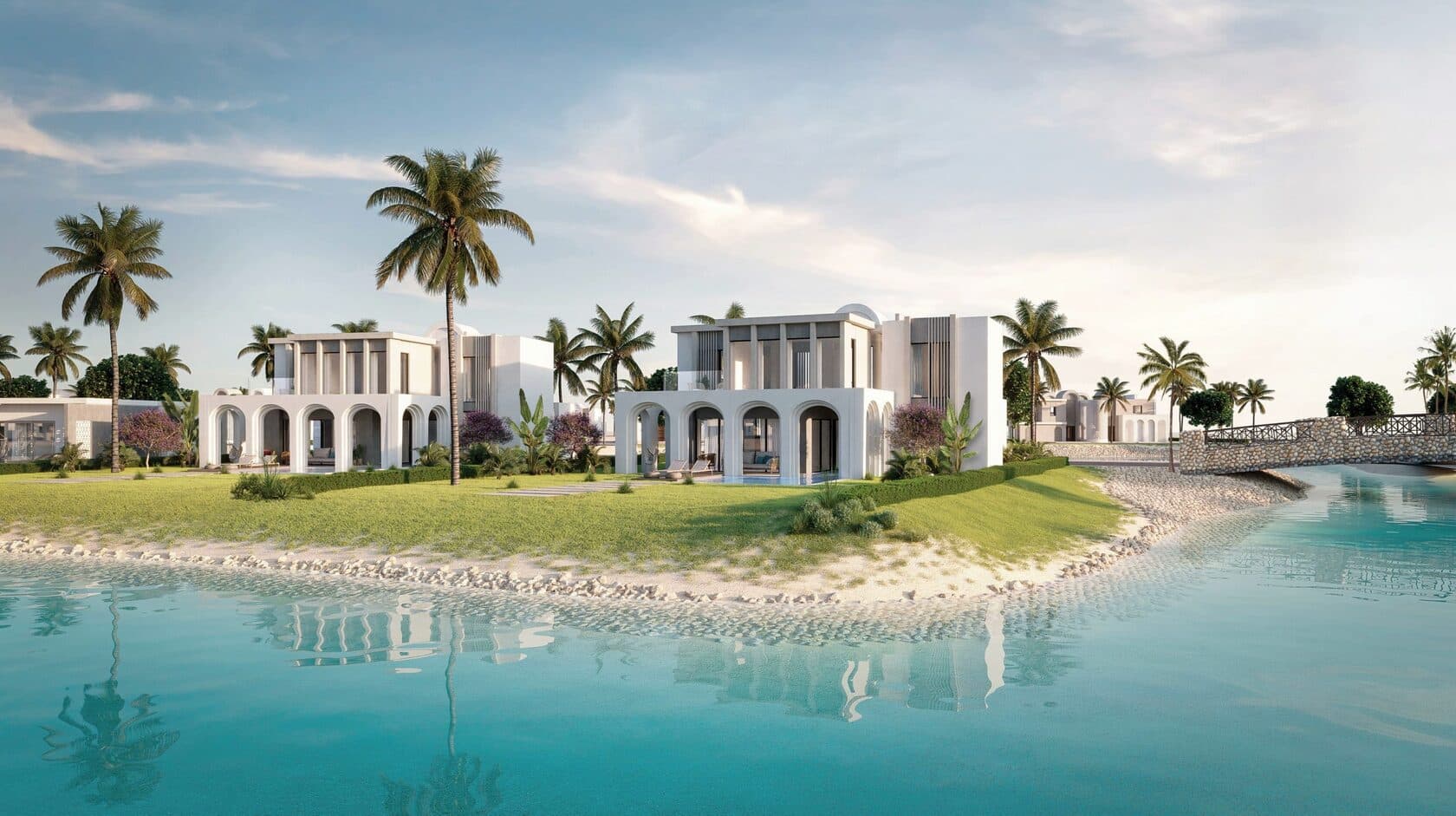
Yes, but only in designated areas. Citizens of Slovakia/Czech Republic may acquire real estate exclusively in so-called Integrated Tourism Complex (ITC) — government-approved resort zones, which include for example Al Mouj Muscat, Muscat Bay, Muscat Hills, Jebel Sifah, Hawana Salalah or AIDA near Yiti.
In an ITC, a foreigner obtains full ownership (freehold) of an apartment, villa or land with the right to sell, rent, donate and inherit. When buying land in an ITC, there is an obligation to develop it within 4 years; otherwise the state may auction the land.
Outside ITC, a foreigner (except citizens of GCC states) cannot own; for investors there is a usufruct right for up to 99 years. Border, military and protected heritage zones are excluded. EU citizens have no special exemptions.
Good news for buyer protection: a new law regulating the real estate market (Royal Decree 79/2025) unified the rules for registration, development and brokerage.
Purchase process step by step
- Reservation of a unit and reservation deposit — approximately 5–10% of price.
- Purchase agreement (SPA) with the developer; for off-plan (properties under construction) payment is made according to the construction schedule.
- Registration of ownership at the Ministry of Housing and Urban Planning (MoHUP). A foreigner must provide passport, proof of legal entry into the country and sometimes proof of source of funds; the process includes NOC/ministerial approval.
- Registration fee 3% and issuance of the title deed "Mulkiya" — typically 2–4 weeks from payment of the price.
- Remote purchase is possible via power of attorney (notarised + legalised + translated); major developers routinely sign SPAs electronically and handle registration through their lawyer.
Fees and taxes at purchase
> The Globeya Full Service is added to the developer's or seller's price. It covers the whole service, legal work included — a lawyer, legal checks and contract translation. It is paid once, on signing the contract, together with the down payment. Taxes and official state fees are not part of it — you will find the main ones below; we tell you the exact amounts for your specific project in advance and go through all the terms with you in a consultation.
- Registration fee: 3% of purchase price (paid by buyer); status as of 2025/26, rate is long-term stable.
Stamp duty or other transfer tax does not exist.
Annual owner costs
There is no annual real estate tax in Oman. Typical costs look like this:
- Service charges in ITC (resort management fees): in premium Al Mouj approximately 10–15 OMR/m² per year; in other resorts typically less. Always request the exact rate for a specific project.
- Electricity and water: approximately 30–80 OMR per month for an apartment, more in summer due to air conditioning.
- When renting, the lease agreement is registered at the municipality with a fee of approximately 3% of the annual rent.
Rental and returns
An owner in an ITC may rent long-term or short-term. In resorts, a hotel or rental pool program often operates through an operator (typically Hawana Salalah, Jebel Sifah) — the resort manages and rents your property and you receive a share of income. Short-term rental on your own is subject to resort rules and tourism regulations — check with the specific project.
Taxation: Oman currently has no personal income tax — rental income is 0%. From 1 January 2028, a 5% income tax is introduced for income above 42,000 OMR per year (approximately €100,000) — most regular rentals will not be affected. Tax obligations may arise in Slovakia or Czech Republic according to your tax residence; we recommend consulting a tax adviser.
Gross returns: Muscat approximately 5–8% per year (apartments higher than villas); net returns after costs approximately 3.5–5%.
Residence and visas
This is the main advantage of ITC zones: purchase in an ITC entitles the owner and immediate family to a residence visa for the duration of ownership. A visa application must be made; it does not arise automatically.
For larger investments, there is an investor residence (programme renewed from 31 August 2025 via Invest Oman): a property for a minimum of 250,000 OMR means a 5-year stay, from 500,000 OMR a 10-year stay; includes spouse, children and dependent parents.
Tourism: EU citizens can enter Oman visa-free for 14 days; from August 2026 there is also a free 14-day tourist visa (Resolution ROP 109/2026), which can be changed to another type of tourist visa before expiry; for a longer stay, eVisa is available through the Royal Oman Police portal (approximately up to 30 days).
Financing
Local mortgages for foreigners exist — selected banks offer them for ITC projects, typically with a higher down payment and rates of approximately 4–6%. However, the prevailing practice is cash or developer payment plan: payments during construction, sometimes even after handover, without a bank.
An alternative is a loan from a Slovak or Czech bank secured by domestic property — a domestic bank will not take the Omani property as security.
One practical note on currency: the rial (OMR) is firmly pegged to the US dollar, so factor in EUR/USD exchange rate risk.
Risks and what to watch out for
- Buy exclusively in an approved ITC zone — only there does a foreigner acquire ownership and entitlement to residence. Have the ITC status documented.
- Escrow account and developer licence. Under law 79/2025, the developer must have a licence and a project escrow account from which it draws according to construction phases, and must register contracts in the real estate register. Send payments only to the project escrow account.
- Liquidity. The market is substantially smaller and less liquid than Dubai — a resale may take longer. Stick to established resorts with functional management.
- Land: there is an obligation to develop within 4 years.
- Service charges and rental pool. Check in advance the level of fees and rental pool conditions — income distribution, guarantees, exclusions for own use.
- Off-plan project delays do occur — track completion dates and penalties in the SPA.
Sale in the future
Cap gains tax does not exist today (0%) even for non-residents. From 2028, gains may be subject to 5% tax only above an annual income limit of 42,000 OMR; the law provides for exemption of main residence (ownership of at least 2 years) and one-time lifetime exemption of another property — details will be clarified in implementing regulations.
The registration fee of 3% is paid by the new buyer; the seller handles any broker commission. Note: sale terminates the residence right tied to ownership.
At home, approximately: in Slovakia exemption from tax after 5 years of ownership, in Czech Republic after 10 years — always according to tax residence.
Frequently asked questions
Is ownership in an ITC "real" freehold? Yes — full ownership registered at the ministry with the Mulkiya title deed; can be sold, rented and inherited, even to a foreigner.
Do I get residence automatically? Ownership in an ITC entitles you and immediate family to a residence visa for the duration of ownership; you must apply for it.
Do I have to fly to Oman? Not necessarily — the purchase can be handled by power of attorney and registration will be arranged by the developer or lawyer.
What taxes will I pay? At purchase 3% registration. No annual real estate tax; rental and sale are currently tax-free, from 2028 5% tax applies only to income above 42,000 OMR per year.
Can I rent if I don't live in Oman? Yes — most commonly through a management or hotel programme directly at the resort.
How does Oman differ from Dubai? Lower entry costs (3% versus 4% plus fees), quieter resort market and residence directly from ownership in ITC; the disadvantage is lower liquidity and narrower choice of projects.
Next step
If Oman interests you, we would be happy to go through with you free and non-bindingly which resort and type of property fits your purpose — whether it's an investment with a rental pool, or a place for a winter stay. Just contact us.
In the meantime, you can view current offers in Oman.
Status of information: August 2026. General information, not legal or tax advice.