Buying Property in Spain: Process, Taxes and Risks
17 August 2026

Spain is one of the most accessible countries for buyers from Slovakia and the Czech Republic: EU citizens acquire property here under exactly the same conditions as Spanish nationals, in full ownership and without any permits. The process is so established that buying remotely via power of attorney is standard practice — you don't have to fly to Spain even once during the entire purchase. The question therefore is not whether you can buy, but how much it will cost you beyond the purchase price and what to watch out for. In this guide, we'll go through it step by step; tax rates are given for Andalusia, where Costa del Sol is located.
Can a foreigner buy property in Spain?
Yes, without restrictions. Slovaks and Czechs buy apartments, houses and plots in full ownership (plena propiedad, equivalent to freehold); leasehold is not used in Spain. The only administrative requirement is NIE (Número de Identificación de Extranjero) — a tax identification number for foreigners, without which the purchase cannot be completed. A lawyer can obtain NIE via power of attorney (it takes 4–8 weeks), or you can request it at the consulate or in person in Spain. Since obtaining it takes a while, it's worth requesting it at the beginning of your search. In practice, you'll also need a Spanish bank account.
Purchase process step by step
- Reservation agreement and reservation fee (usually €3,000–10,000) — the property is withdrawn from the offer and no longer marketed to other buyers.
- Legal review of the property by a lawyer: cadastre extract, charges, building permits and debts to the owners' association.
- Contrato de arras (deposit agreement) — usually 10% of the price. The terms are strict on both sides: if the buyer withdraws, they lose the deposit; if the seller withdraws, they return double. For new buildings, instead of arras, a purchase agreement with the developer is signed with a payment schedule.
- Escritura de compraventa — signing the deed of sale with a notary, payment of the remaining price by bank check or transfer, delivery of keys and registration in the cadastre (Registro de la Propiedad).
For a ready-made property, the journey from offer to keys usually takes 8–12 weeks. Remote purchase works simply: the client gives the lawyer a notarial power of attorney (poder), which can be signed at home with an apostille. For purchases of properties under construction (off-plan), the deed of sale is signed upon completion and handover.
Fees and taxes on purchase
> The Globeya Full Service is added to the developer's or seller's price. It covers the whole service, legal work included — a lawyer, legal checks and contract translation. It is paid once, on signing the contract, together with the down payment. Taxes and official state fees are not part of it — you will find the main ones below; we tell you the exact amounts for your specific project in advance and go through all the terms with you in a consultation.
The purchase price is not the final amount — in Andalusia, you must add:
- New building from developer: VAT (IVA) 10% + stamp duty AJD 1.2%.
Annual owner costs
Even after purchase, you need to account for regular expenses — include them in your budget from the start:
- IBI (municipal property tax): 0.4–1.1% of the cadastral value, which is significantly lower than the market price. For a typical apartment on Costa del Sol, this amounts to roughly a few hundred euros per year.
- Non-resident imputed income tax: even if you don't rent the property, the state taxes it as a fictitious income — 19% of 1.1% (or 2%) of the cadastral value. It is filed once a year with form Modelo 210.
- Comunidad — fees to the owners' association or resort: depending on facilities, roughly €50–400 per month, even more in luxury resorts.
- Waste removal (basura), utilities and insurance: roughly a few hundred euros per year plus consumption.
- Wealth tax: in Andalusia it is virtually 100% waived; the national solidarity tax applies only to property over €3 million.
Rental and yield
A foreigner may rent without restrictions and long-term rental does not require any license. The situation is different for short-term (tourist) rental: in Andalusia it requires registration of VUT/VFT in the regional tourism register (Registro de Turismo de Andalucía). As of April 2025, moreover, in an apartment building you need the approval of 3/5 of the owners' association and municipalities may restrict tourist rentals in some areas. If you buy with an investment goal, the specific municipality and building should be verified before purchase. The national unified register of short-term rentals was repealed by the Supreme Court in a ruling dated 19 May 2026 (the digital single window and the obligation of platforms to report data remained in force) — therefore, the Andalusian registration is decisive.
Rental income for a non-resident from the EU is taxed at a rate of 19% with the possibility of deducting proportional costs, again via form Modelo 210. Returns depend on location and occupancy; we do not guarantee specific figures.
Residence and visas
Buying property does not confer any residence rights — but as an EU citizen, you don't need one either. Slovaks and Czechs can stay in Spain indefinitely; for stays longer than 90 days, they register (certificado de registro de ciudadano de la UE). "Golden visa", that is, residence for investment from €500,000, Spain abolished on 3 April 2025 — but it did not apply to EU citizens anyway.
Financing
Spanish banks typically provide mortgages to non-residents from the EU up to 60–70% of the price, based on the lower of the purchase price and the bank's appraisal. Own resources are therefore needed for 30–40% of the price plus purchase costs. The bank will require proof of income, tax returns and account statements, usually with translation.
For projects under construction, a developer payment schedule is common: roughly 20–40% of the price is paid during construction and the rest upon completion — which can be covered by a mortgage. An alternative is a loan from a Slovak or Czech bank secured by property at home (the so-called American mortgage); in Spain, you then act as a cash buyer.
Risks and what to watch out for
- Buying off-plan: the law (Ley 20/2015) requires the developer to cover all deposits with a bank guarantee or insurance and to accept them only after obtaining a building permit. Always request an individual bank guarantee (aval) for each payment and pay only to the developer's special account.
- Legality of construction: for new buildings, verify the license for first occupancy (licencia de primera ocupación); for older houses, the legality of construction — especially for rural houses on non-buildable land.
- Independent lawyer: buy only with your own lawyer, not the developer's lawyer.
- Cadastral reference value: tax may be assessed on it if it is higher than the purchase price — your lawyer can find it out in advance so the tax bill doesn't surprise you.
- Debts attached to the property: obligations to the owners' association or unpaid IBI pass partially to the buyer — a review is essential.
Sale in the future
A non-resident pays capital gains tax of 19% — on the difference between the sale price and the acquisition price including documented costs and investments. The buyer is obliged to withhold 3% of the sale price at sale and remit it to the tax office as an advance payment (Modelo 211); the seller then settles the actual tax (Modelo 210) within 4 months and any overpayment is returned by the office. In addition, a municipal capital gains tax is paid on the increase in the value of the land — roughly 0.5–3% of the value; if the sale results in a loss, it is not paid. Important: there is no time test, capital gains tax is paid regardless of the length of ownership.
Frequently asked questions
Do I need NIE before the reservation? No, but request it as soon as possible — without NIE you cannot sign the deed and obtaining it can take weeks to months.
Do I have to be personally in Spain for the purchase? No. Purchases are commonly made via power of attorney given to a lawyer, which can be signed at home with an apostille.
How much should I prepare in addition to the purchase price? For a new build in Andalusia, VAT of 10% and AJD stamp duty of 1.2%. The Globeya Full Service is added to the developer's or seller's price — it includes a lawyer, legal checks and contract translation. It is paid on signing the contract, together with the down payment. We tell you any other taxes and official state fees for your specific project in advance and go through all the terms with you in a consultation.
Are my funds safe when buying off-plan? Deposits must by law be covered by a bank guarantee or insurance — always request proof of guarantee for each payment.
Can I rent my apartment to tourists? Yes, after registration in the Andalusian tourism register; in an apartment building as of 2025 you need the approval of 3/5 of the owners and some municipalities restrict tourist rentals — this is verified for the specific property.
Will I get a mortgage in Spain? As a non-resident from the EU, usually up to 60–70% of the price; alternatives include a developer payment plan or a loan from home against your own property.
Next step
If you're thinking about buying in Spain, we'd be happy to go through your plans with you free and without obligation — from selecting a location through budgeting to tax implications. A consultation will save you hours of searching on your own and show whether and how your plan makes sense. In the meantime, you can view current offers in Spain.
Status of information: August 2026. Informational guidance, not legal or tax advice.
Properties in this country
Listings — Spain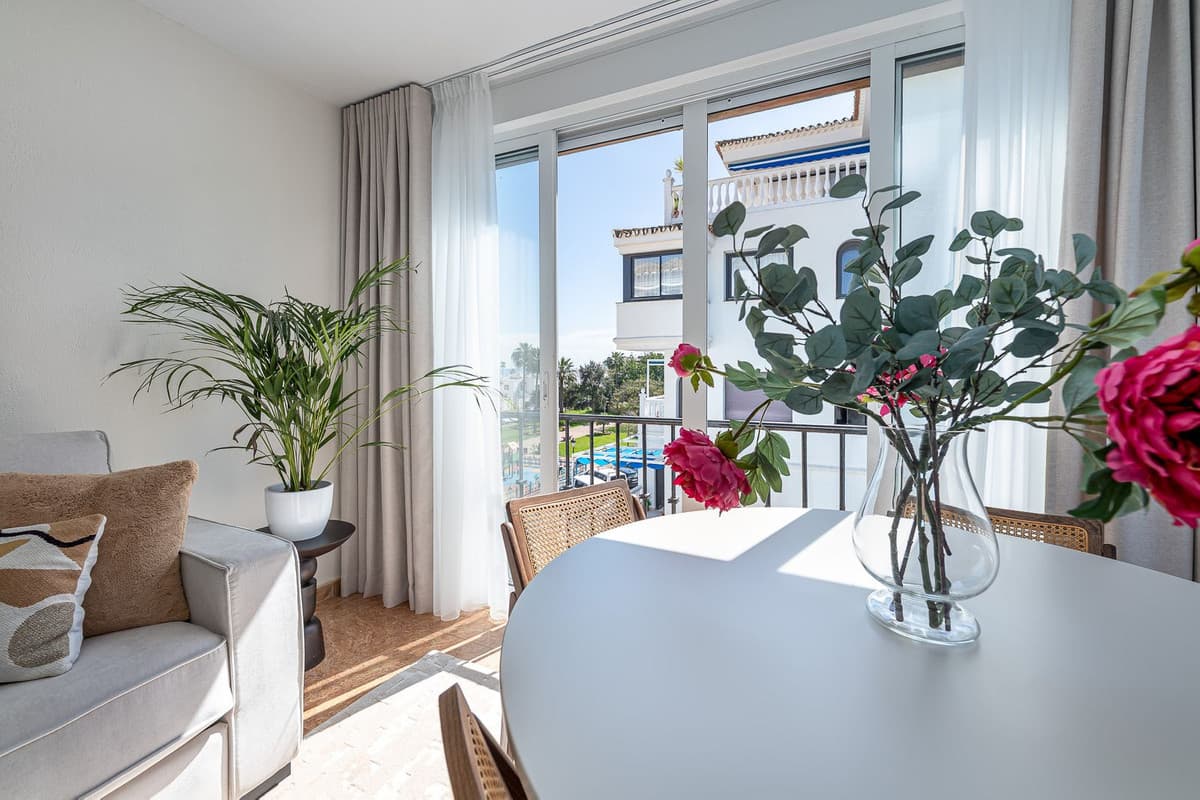 Spain · La DuquesaCompleted
Penthouse in La Duquesa Marina
Stylish one-bedroom penthouse on the top floor in the heart of La Duquesa Marina, one of the most charming ports on Costa del Sol, with sea views and valid tourist license for short-term rental.
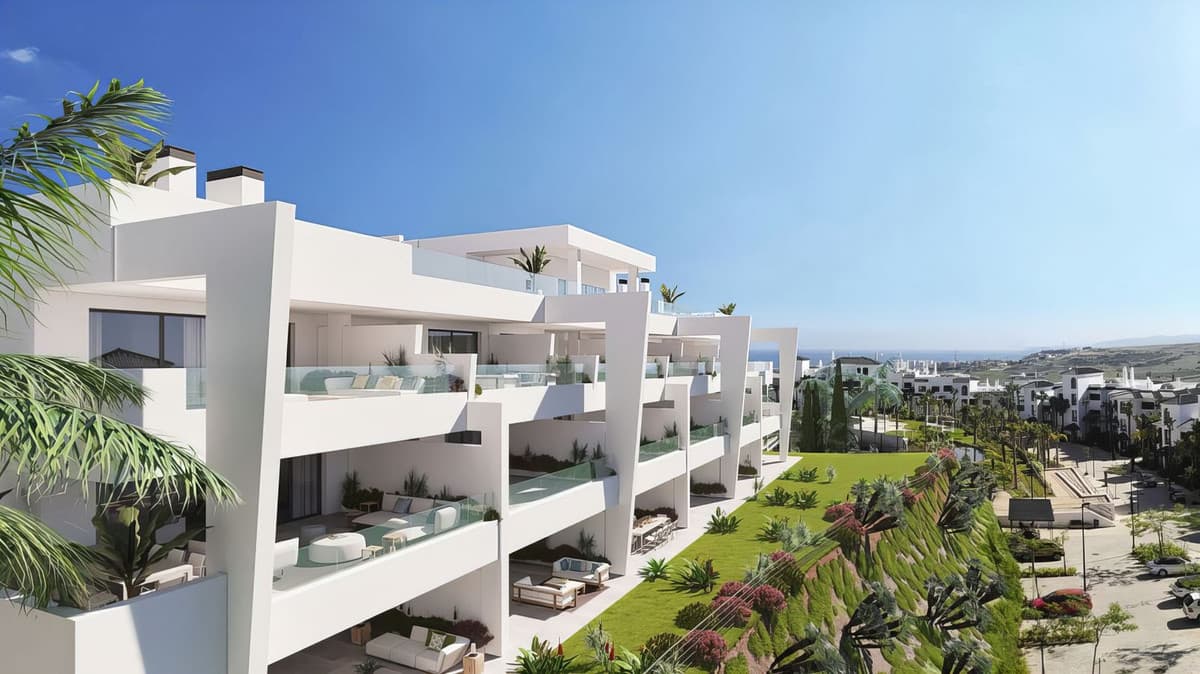 Spain · EsteponaCompleted
Apartment in Mirador de Estepona Hills
Beautiful modern 2-bedroom luxury apartment for sale in Mirador de Estepona Hills residence, Estepona, with nature, mountain and partial sea views.
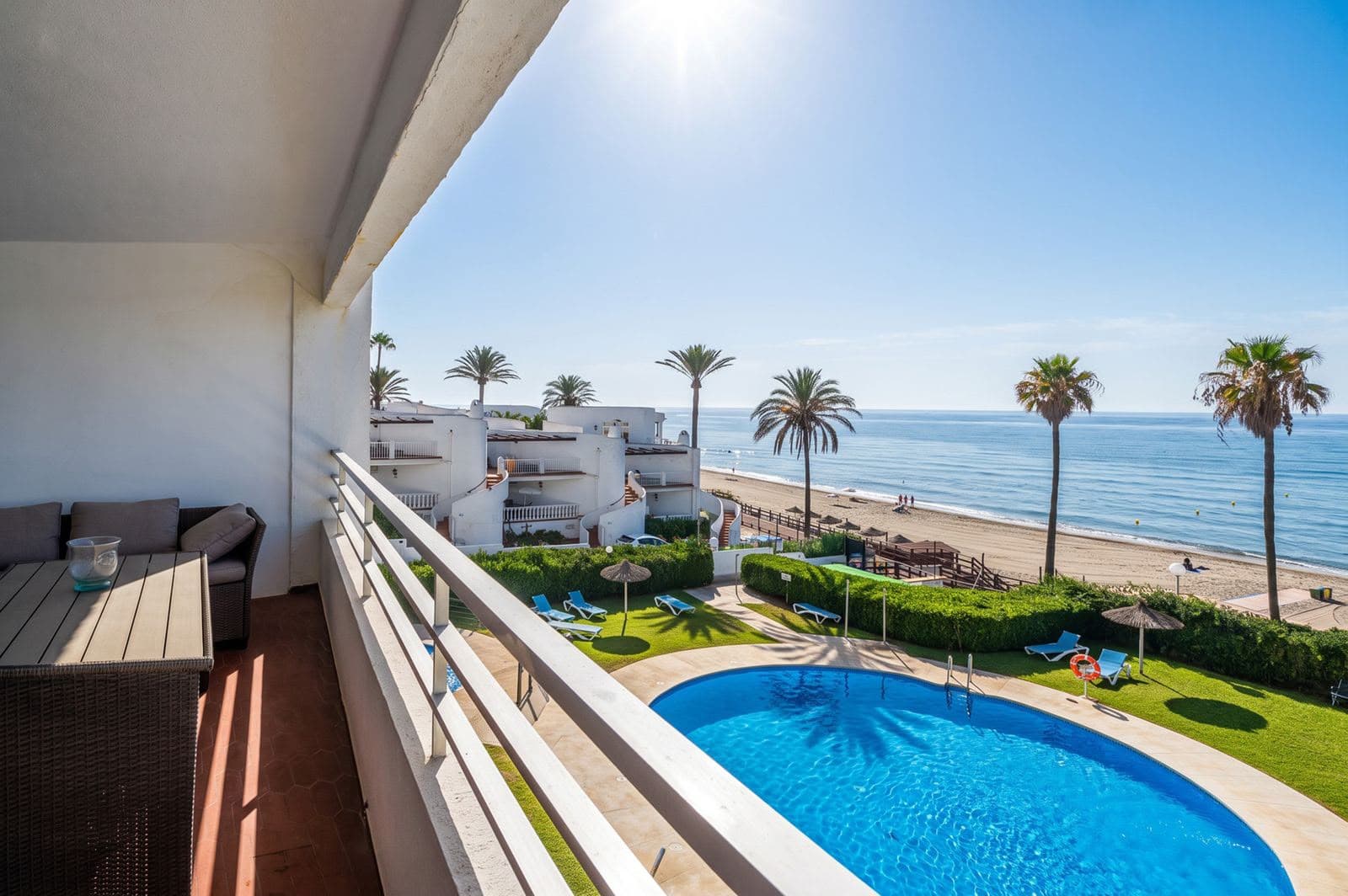 Spain · Calahonda
Apartment by the beach in Calahonda, Mijas
Attractive beachfront apartment in Calahonda, Mijas on Costa del Sol with direct beach access and sea views.