Buying Property in Thailand: Process, Taxes, and What to Watch Out For
17 August 2026

Thailand is one of the few Asian countries where a foreigner — including a Slovak or Czech — can own a flat in full ownership registered in the land registry, on equal terms with local residents. In beach resorts like Pattaya and Jomtien, long-term rental gross yields are typically around 5–7% (approximate), and buying remotely is standard practice here. However, the rules are specific and it's worth knowing them before you send a reservation deposit.
Can a foreigner buy in Thailand?
Yes — but only flats in condominiums (condo). A foreigner can own a flat in freehold, i.e., in full ownership registered in the land registry, provided the share of foreign owners in a given building does not exceed 49% of the total floor area. This "foreign quota" stems from the Condominium Act of 1979 (originally 40%), was raised to today's 49% by amendment in 1999, and despite proposals to increase it to 75% remains in force.
If the quota in a building is exhausted, the flat can only be bought on leasehold — registered lease for a maximum of 30 years. Promised extensions of "30+30+30" are only a contractual promise, not a legal entitlement; a Supreme Court ruling from 2025 has moreover cast doubt on chained extensions.
Foreign owners cannot own land and houses with land. Circumventing the ban through a Thai company with nominee shareholders is illegal and authorities have been actively investigating such structures since 2023. For EU citizens, no exceptions apply — the rules are the same for all foreigners.
The buying process step by step
- Reservation. You pay a reservation deposit of approximately 50,000–200,000 THB and the flat is withdrawn from the market.
- Sales and Purchase Agreement (SPA). Signed within 2–4 weeks; when buying off-plan, payments are made in installments according to construction phases directly to the developer.
- Transfer of funds from abroad. The purchase price must come to Thailand in foreign currency from abroad with the purpose of payment "purchase of condominium". The bank issues an FET form (Foreign Exchange Transaction, for amounts above approximately 50,000 USD) — without it, the land registry will not register freehold to a foreigner.
- Transfer at the Land Office. Fees are paid, the transfer is signed before an official, and the buyer receives an ownership title to the unit (condominium title Or. Chor. 2). The transfer itself takes one day; completed new buildings are registered after handover.
- Remote purchase is common — you handle it by power of attorney on the land registry form (Tor Dor 21) with certified signatures, typically through a local lawyer.
Fees and taxes upon purchase
> The Globeya Full Service is added to the developer's or seller's price. It covers the whole service, legal work included — a lawyer, legal checks and contract translation. It is paid once, on signing the contract, together with the down payment. Taxes and official state fees are not part of it — you will find the main ones below; we tell you the exact amounts for your specific project in advance and go through all the terms with you in a consultation.
- Transfer fee: 2% of the appraised or purchase price (whichever is higher). For new construction, the developer may transfer a maximum of half (1%) to the buyer; on further sale, the fee is commonly split by agreement.
- Specific Business Tax 3.3% is paid by the seller if the property was owned for less than 5 years; otherwise, a stamp duty of 0.5% is paid. Never both at the same time.
- Seller's withholding tax: company 1%, natural person according to a progressive table from the appraised price and years of ownership.
- The buyer of a new build pays about 1% transfer fee. The one-time sinking fund and the management deposit are set by the developer — we tell you their amounts for your specific project in advance.
Annual costs for the owner
- Land and building tax: residential rates approximately 0.02–0.1% of official value per year; unused or commercial property is higher, from 0.3%.
- Building management (CAM fee): approximately 25–100 THB/m² per month; in Pattaya and Jomtien a typical mid-range rate is 35–70 THB/m²/month.
- Utilities: electricity approximately 4–5 THB/kWh, water is inexpensive, internet approximately 300–600 THB per month.
Rental and yield
A foreigner may rent out the flat, but only for 30 days or more. Shorter stays in the Airbnb style require a hotel license under the Hotel Act, which a typical condominium will not obtain — fines are 20,000 THB plus 10,000 THB for each day of violation.
Income tax on rental income for a non-resident is a withholding tax of 15% of gross rent. An alternative is to file a tax return with a 30% standard deduction of costs and progressive rates — this is often more advantageous. The Czech Republic has a double taxation treaty with Thailand; Slovakia does not have a double taxation prevention treaty with Thailand — Slovak owners should discuss the tax impact (possible double taxation) in advance with a tax advisor.
Gross yields on long-term rentals in Pattaya are typically reported around 5–7% (approximate); net yield after costs is considerably lower.
Residence and visas
Buying property in Thailand does not grant any residence rights. Citizens of Slovakia and the Czech Republic have visa-free entry for 60 days with the possibility of extension for 30 days for 1,900 THB. Note: The cabinet approved on 19 May 2026 a shortening of visa-free stay to 30 days and the change will take effect 15 days after publication in the official gazette — check the current status before traveling.
Long-term options:
- DTV — 5 years, 180 days per entry, designed for remote workers,
- LTR — 10 years; investment from 500,000 USD for example into property plus other conditions,
- Thailand Privilege — paid membership for 5–20 years,
- retirement visa O — from age 50, 800,000 THB deposit in a Thai bank.
Financing
A local mortgage is practically unavailable to a foreigner — exceptions are UOB and ICBC banks with strict conditions and MBK Guarantee (LTV approximately 50%, higher interest). The standard is cash or developer's payment plan during construction: typically a deposit plus installments and the balance upon handover. Some developers also offer short-term financing after handover, usually for at most approximately 50% of the price.
A realistic path for Slovaks and Czechs: a loan secured by property at home (so-called American mortgage) and sending the money to Thailand by transfer — you also fulfill the FET requirement this way.
Risks and what to watch out for
- Off-plan without escrow. Installments go directly to the developer, mandatory escrow does not exist — if the developer fails, the buyer is an unsecured creditor. Check the developer's history, project financing, building permit, and approved EIA. As of January 2025, new regulations from the OCPB authority apply, which protect buyer deposits.
- Leasehold. Extensions after 30 years are not legally enforceable — buy leasehold only with awareness of this limit.
- Foreign quota. Before reservation, have the free quota in the building confirmed in writing.
- FET documentation. Keep all transfer confirmations — without them, freehold cannot be registered or money taken out of the country later.
- Thai company for buying a house or land with nominee shareholders is an illegal structure — authorities actively investigate it.
Selling in the future
Upon sale, the seller pays the transfer fee (share by agreement), SBT 3.3% if selling within 5 years of acquisition (otherwise 0.5% stamp duty), and withholding tax calculated progressively from the official appraised price according to years of ownership — not from actual gain. For typical flats, it amounts to approximately 1–3% of the price. A separate capital gains tax for individuals does not exist — withholding at the land registry is in practice final. Proceeds from the sale can be sent abroad if the original purchase is documented with FET evidence.
Frequently asked questions
Will the flat really be registered in my name? Yes — with freehold within the 49% quota, you are the owner registered on the condominium title of the unit (Or. Chor. 2), on equal terms with a Thai citizen.
Do I have to travel to Thailand to buy? No, purchase by power of attorney from a distance is common; however, the money must come from your foreign account.
Can I buy a villa with land? Land no. A villa is handled by leasing the land (maximum 30 years registered) plus ownership of the structure — you need to understand the limits of this arrangement.
Can I rent out the flat via Airbnb? Legally only from 30 days upward; shorter rentals require a hotel license and incur fines.
Can I buy on installments? Yes, during construction through the developer's payment plan; a bank mortgage for a foreigner is exceptional.
Do I get residency by buying? No. Residency is handled by visas — tourist visa-free stay, DTV, LTR, Thailand Privilege, or retirement visa.
Next step
If you are considering buying a flat in Thailand, we are happy to discuss with you free of charge whether freehold or leasehold makes sense in your situation and how to properly set up payments from abroad. Consultation is non-binding and does not commit you to anything. In the meantime, you can view current offers in Thailand.
Information status: August 2026. Approximate information, not legal or tax advice.
Properties in this country
Listings — Thailand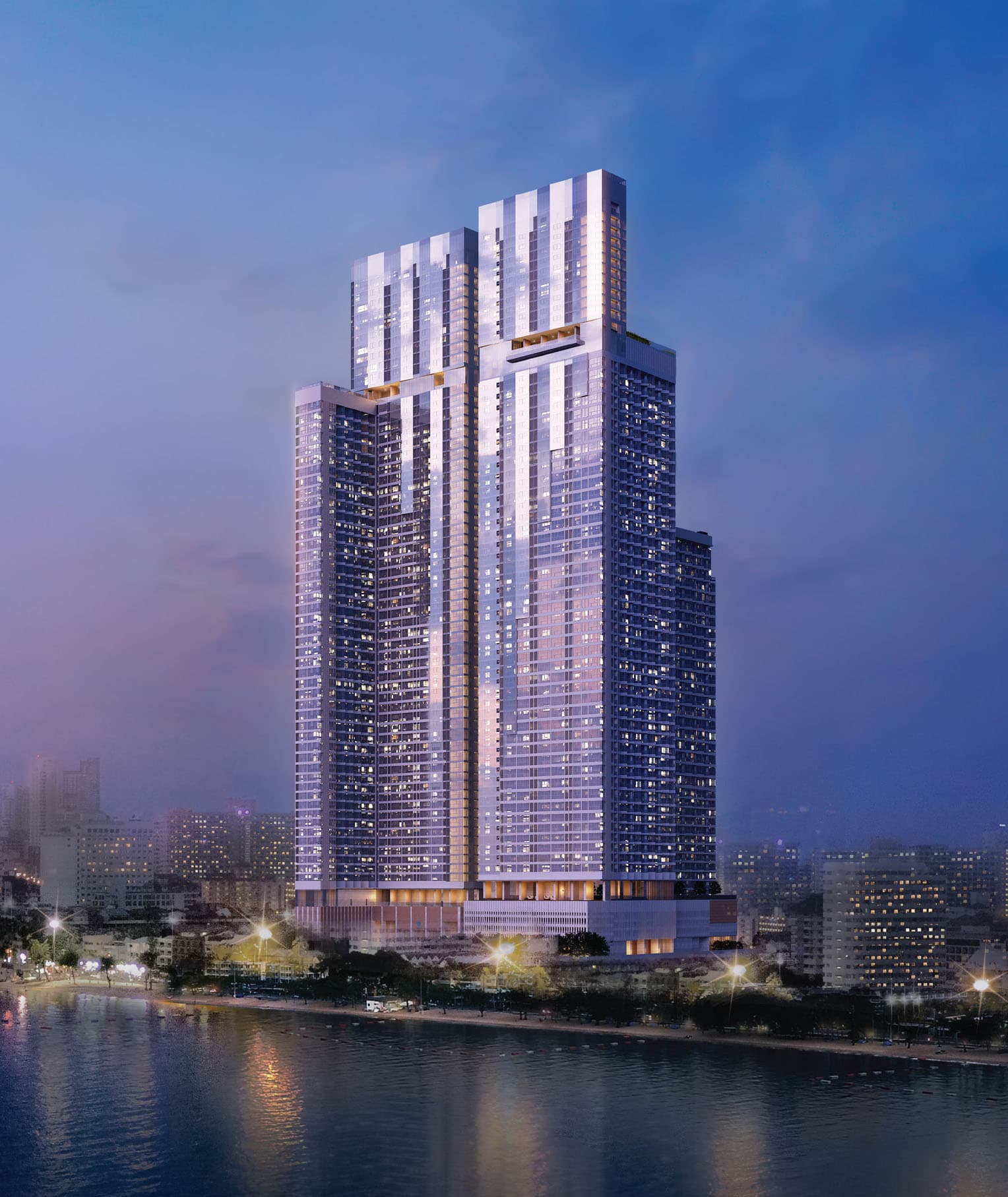 Thailand · Pattaya – Jomtien⭐ TOPUnder construction
SKYPARK Lucean Jomtien – Pattaya, Thailand
Luxury project with direct sea views, Tower A 60 storeys (899 units), Tower B 31 storeys, studio to penthouse, rich amenities.
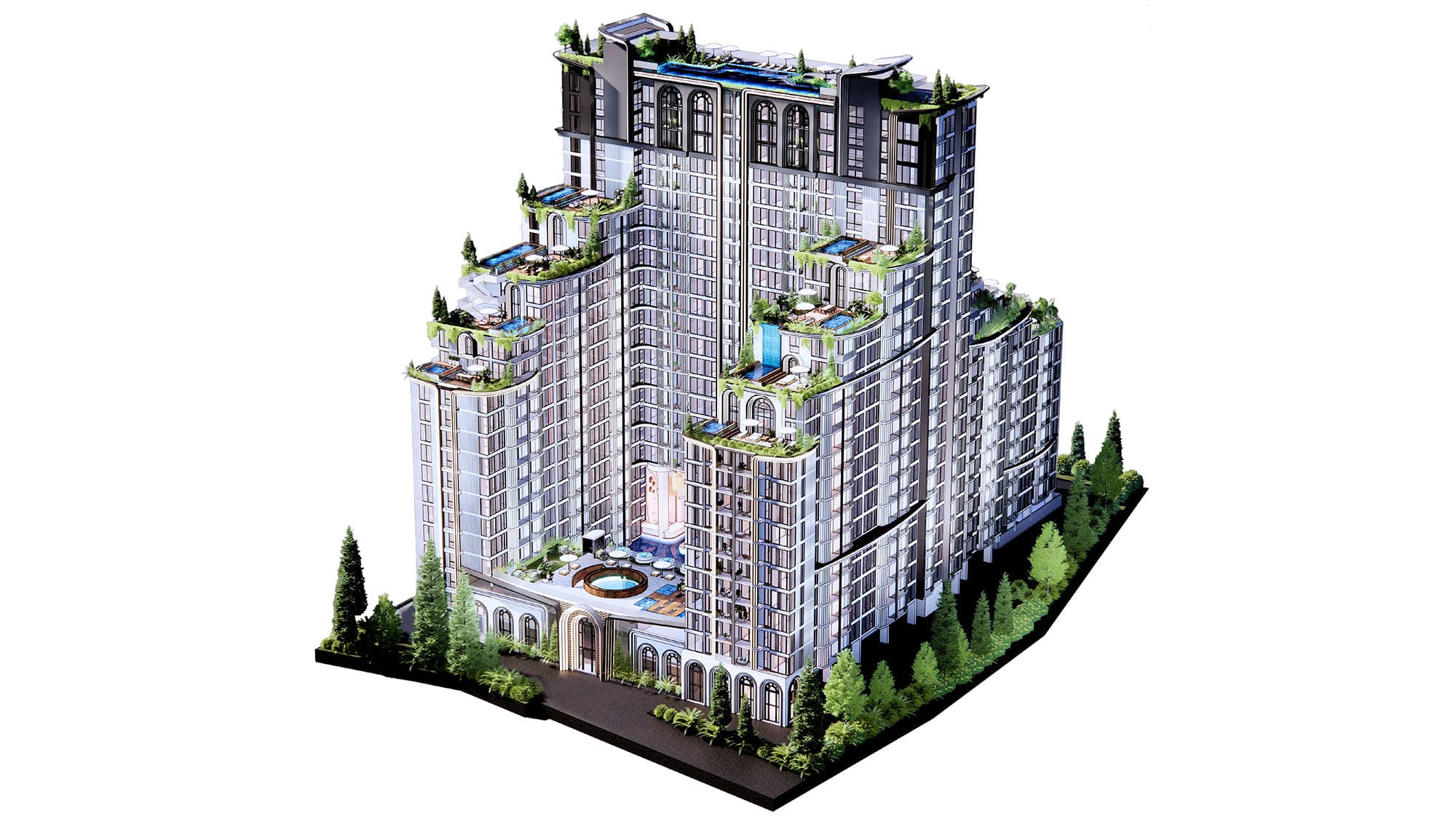 Thailand · Pattaya – JomtienUnder construction
Embassy Condominium & Life – Pattaya, Thailand
Premium residential project on Jomtien Beach featuring luxury apartments, pools, restaurant bar and wellness facilities.
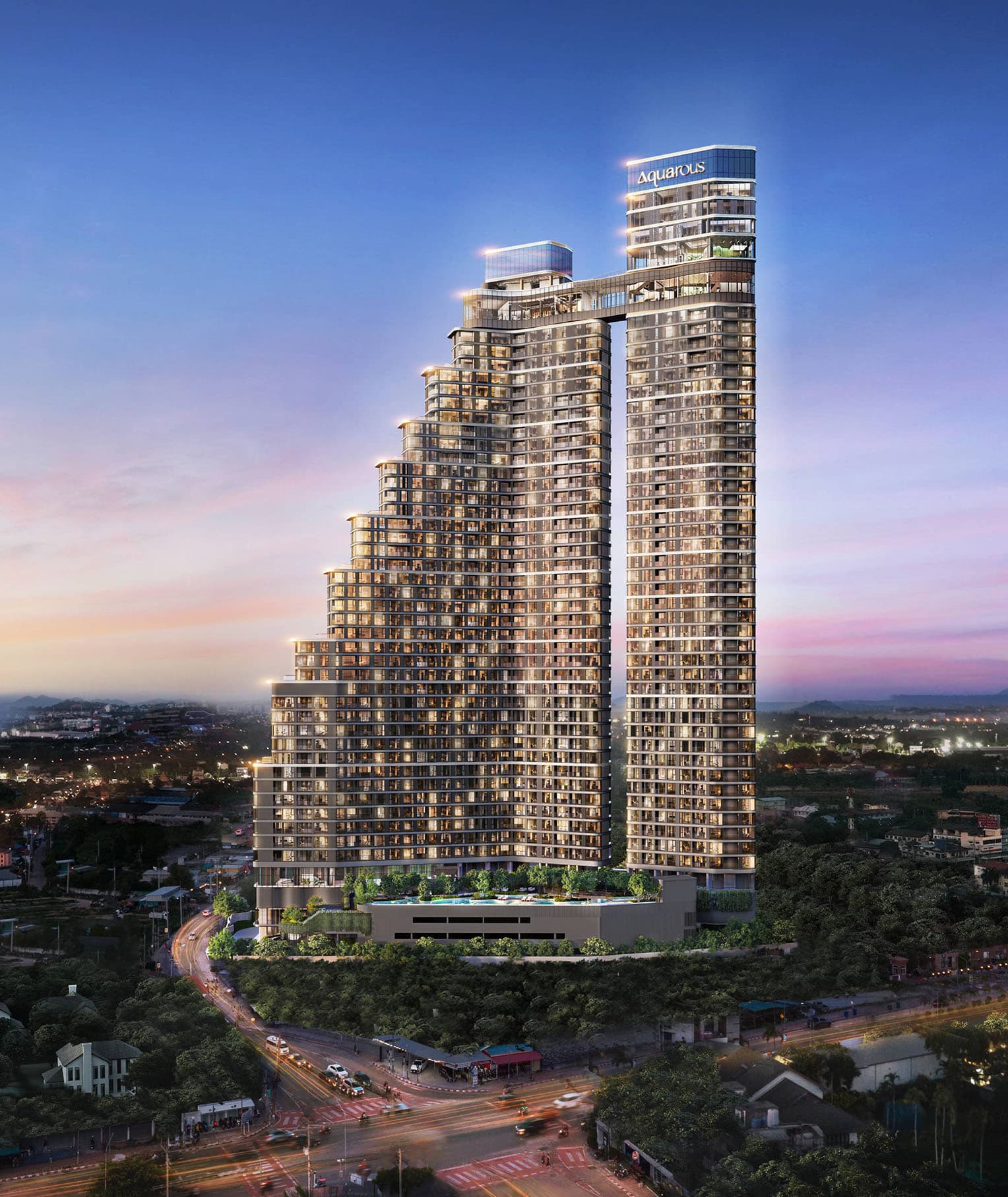 Thailand · Pattaya – JomtienUnder construction
AQUAROUS Jomtien – Pattaya, Thailand
Modern high-rise residential project just 500 meters from Jomtien Beach with 2 towers, pools and comprehensive amenities.