Buying Property in Turkey: Process, Taxes and What to Watch Out For
17 August 2026

Turkey is among countries where Slovaks and Czechs buy properties in full ownership — the same ownership that locals have. Ownership is confirmed by the state deed TAPU, the transfer of a finished property typically takes 1–3 weeks, and the entire transaction can be handled remotely via power of attorney. In this guide, we will go through the process step by step, including fees, taxes, rental and risks to watch out for.
Can a Foreigner Buy in Turkey?
Yes. Citizens of Slovakia and Czechia are among approximately 183 nationalities allowed to acquire properties in Turkey in full ownership (freehold). Ownership is confirmed by the state deed of ownership TAPU, issued by the cadastral office (Tapu ve Kadastro). Leasehold is not commonly used in Turkey — the buyer purchases ownership directly, which is full and inheritable.
There are several limits, which practically do not restrict an ordinary apartment buyer: one foreign individual may own a maximum of 30 hectares throughout Turkey, foreigners collectively may own a maximum of 10% of the area of a given district, and purchases are not allowed in military and security zones — the cadastre will check this automatically. You can buy apartments and land; when buying a construction plot, a foreigner must submit a construction project within 2 years.
Step-by-Step Purchase Process
- Unit reservation and reservation fee (typically €1,000–5,000), signing the purchase agreement with the developer including a payment schedule and specification.
- Turkish tax number (vergi numarası) — obtain immediately — and open a Turkish bank account.
- Mandatory price appraisal by a licensed appraiser (SPK) — a requirement for every transfer to a foreigner. Costs approximately $150–500 USD and takes 3–7 working days.
- Exchange of purchase amount: the foreigner must sell foreign currency to a Turkish bank and obtain DAB confirmation (döviz alım belgesi). Without DAB, the cadastre will not register the transfer — payment "hand-to-hand" or through a money changer is not valid.
- TAPU transfer at the cadastral office — both parties (or their proxies) sign before an official. If the buyer does not speak Turkish, a court interpreter is mandatory. Earthquake insurance DASK is also mandatory.
- For finished property, the entire process typically takes 1–3 weeks. For off-plan purchases, the TAPU in the form of kat irtifakı — share in land — can be transferred during construction or after payment; after inspection (iskan), it changes to kat mülkiyeti.
Remote purchase is common: a power of attorney for a lawyer is usually signed before a Turkish notary or at home with an apostille and official translation. The lawyer then arranges the account, DAB and TAPU transfer.
Fees and Taxes on Purchase
> The Globeya Full Service is added to the developer's or seller's price. It covers the whole service, legal work included — a lawyer, legal checks and contract translation. It is paid once, on signing the contract, together with the down payment. Taxes and official state fees are not part of it — you will find the main ones below; we tell you the exact amounts for your specific project in advance and go through all the terms with you in a consultation.
- Transfer fee (tapu harcı): 4% of price. By law, it is paid 2% each by buyer and seller; in practice, the buyer often pays all of it — agree on this in advance.
- VAT when buying from a developer: 1–20% depending on type and size of property; for resort projects, it is usually included in the price. A foreigner without residence in Turkey may be exempt from VAT on the first sale from the developer if paying in foreign currency from abroad and does not resell the property for at least 3 years (approximate, verify with your lawyer for the specific project).
Annual Owner Costs
Property tax (emlak vergisi) is 0.1% annually for apartments, in metropolitan cities like Istanbul or Antalya/Alanya double that — 0.2% of the official value. It is paid in two installments — in March and November. For luxury properties above the legal threshold (in millions of Turkish liras), there is also a special tax on valuable housing.
Add the complex management fees (aidat) — in resorts in Alanya approximately €30–150 monthly depending on amenities (pool, spa, security) — and mandatory DASK insurance, approximately €20–80 annually. Electricity and water are cheaper than in Slovakia: at normal use approximately €50–150 monthly.
Rental and Yield
A foreigner may rent their property. Long-term rental requires no license. Short-term (tourist) rental up to 100 days, however, has required a license from the Ministry of Tourism since 2024 (Law No. 7464): written consent from all owners in the building is needed, and in houses with more than 3 apartments, a maximum of 25% of units may hold a license. Fines start at 100,000 TRY. In apartment buildings, Airbnb is therefore difficult to achieve — licensed aparthotel projects or long-term rental are more realistic.
Rental income from non-residents is taxed progressively 15–40% in Turkey (with an annual exemption amount if residing); the owner files the tax return. Gross yields from long-term rental in Alanya are typically quoted at approximately 4–7% annually — they depend on the project and cannot be guaranteed.
Residence and Visas
Slovaks and Czechs travel to Turkey visa-free for 90 days within 180 days — thus no permit is needed for holiday use of the apartment. Buying a cheaper property does not automatically grant residence: short-term residence (ikamet) based on ownership is tied to a property worth at least $200,000 USD according to an appraisal. Permission is issued for 1–2 years and renewed as long as you own the property.
Beware of "closed districts": over 1,100 neighbourhoods with a foreigner share above 20% (including parts of Alanya and Istanbul) do not accept new residence applications. If buying for residence, the neighbourhood should be verified before purchase.
Turkey also offers citizenship by investment: purchase for a minimum of $400,000 USD (can be combined from multiple units) with a 3-year obligation not to sell (recorded as a note in TAPU). It includes spouse and children under 18; processing takes approximately 6–12 months.
Financing
Turkish mortgages for foreigners exist (LTV up to approximately 50%, maturity up to 10 years), but interest rates in liras are persistently very high, so they are practically not used. The common practice is cash or interest-free payment plans from the developer for off-plan projects — typically 30–50% deposit and the balance in installments over 12–36 months until completion. An alternative for clients from SK/CZ is a loan from a domestic bank secured by property at home (American mortgage) — the Turkish property is then purchased "for cash".
Risks and What to Watch Out For
- Off-plan: request TAPU of type kat irtifakı immediately upon signing — the land share protects you even if the developer has problems. Check the building permit, land ownership and developer history; Turkey does not have mandatory escrow accounts for typical projects.
- Encumbrances on TAPU (mortgages, executions) — your lawyer will verify with a cadastral extract.
- Do not record a lower price in TAPU than the actual amount — undervaluation means risk of penalties and higher tax on future sale.
- Inspection (iskan): without it, there may be problems with connections and full legal ownership.
- Purchase for residence or citizenship: the value must be confirmed by appraisal, not the purchase contract.
- Lira exchange rate risk applies especially to payment plans agreed in TL — agree prices in EUR/USD.
Future Sale
When selling more than 5 years after acquisition, the gain of a natural person is completely tax-exempt. When selling within 5 years, the gain (adjusted for inflation, after deducting an annual exemption) is taxed progressively 15–40%. Buyer and seller pay transfer fee tapu harcı 4% again. Money from the sale can be freely transferred abroad via bank.
Frequently Asked Questions
Is TAPU a secure proof of ownership? Yes, it is a state entry in the cadastre; ownership is full and inheritable, the same as for Turks.
Can I buy completely remotely? Yes, via power of attorney with apostille for a lawyer; personal attendance is not necessary even at TAPU transfer.
Do I have to pay in Turkish liras? The purchase price must be exchanged via a Turkish bank (DAB confirmation); however, you negotiate the price in EUR/USD.
Will I get residence by buying an apartment? Only for a value of $200,000 USD and in a district not closed to foreigners; otherwise, visa-free 90/180 days applies.
Can I rent an apartment via Airbnb? Only with a tourist license — consent from all neighbours in the building is needed, so it is often impractical in apartment buildings; long-term rental is free.
When can I sell without tax? After 5 years of ownership, the gain of a natural person is tax-exempt.
Next Step
If you are considering buying in Turkey, we are happy to go through your budget, locations and the entire process with you without obligation — a consultation is free. Contact us and tell us what you are looking for.
In the meantime, you can view current offers in Turkey.
Information status: August 2026. Informational only, not legal or tax advice.
Properties in this country
Listings — Turkey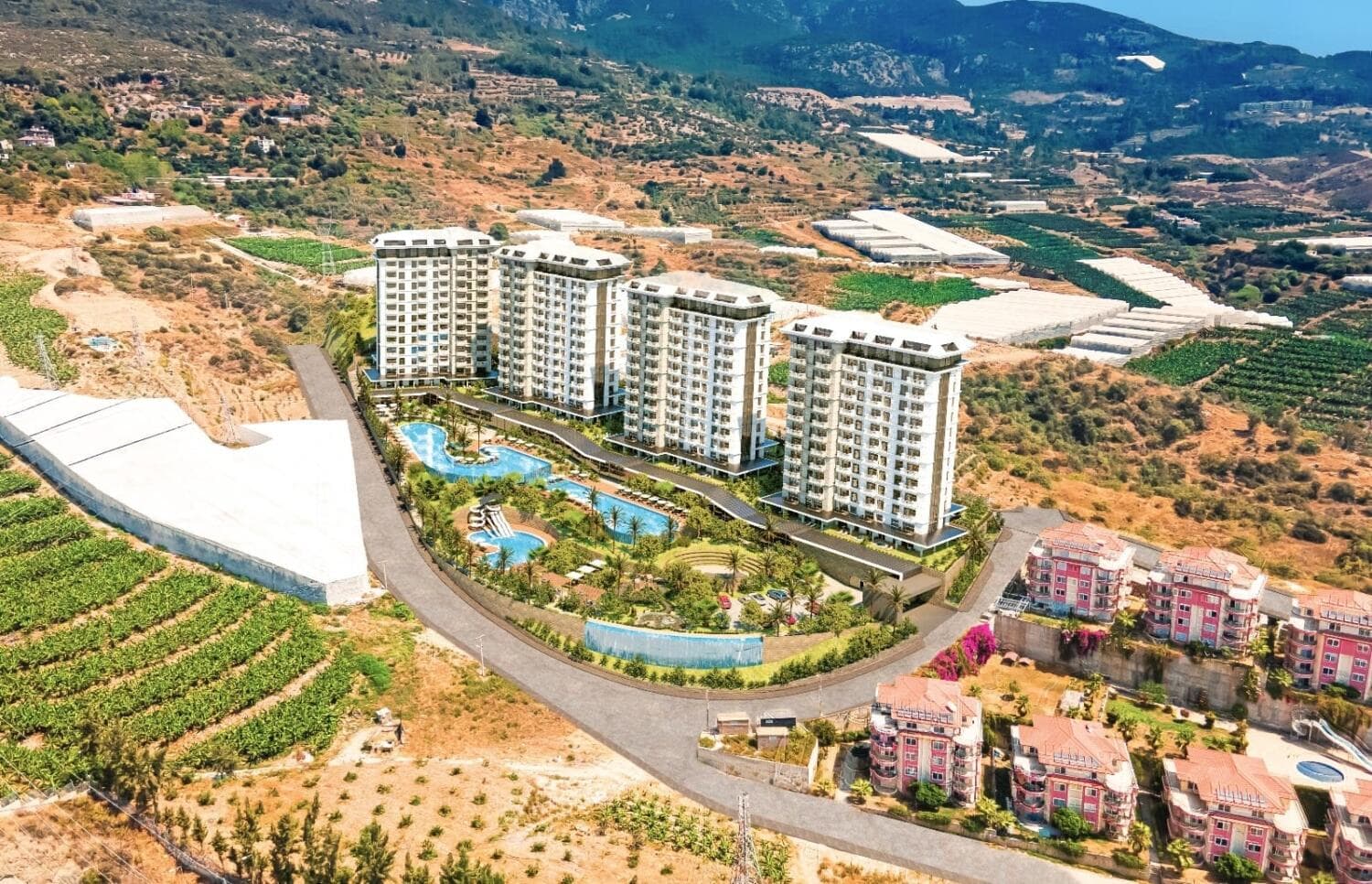 Turkey · Mahmutlar, Alanya⭐ TOPCompleted
Hotel Style Apartments in Mahmutlare, Alanya
Luxury apartments with panoramic views in Mahmutlare complex featuring hotel-standard amenities, multiple pools, spa, and family entertainment.
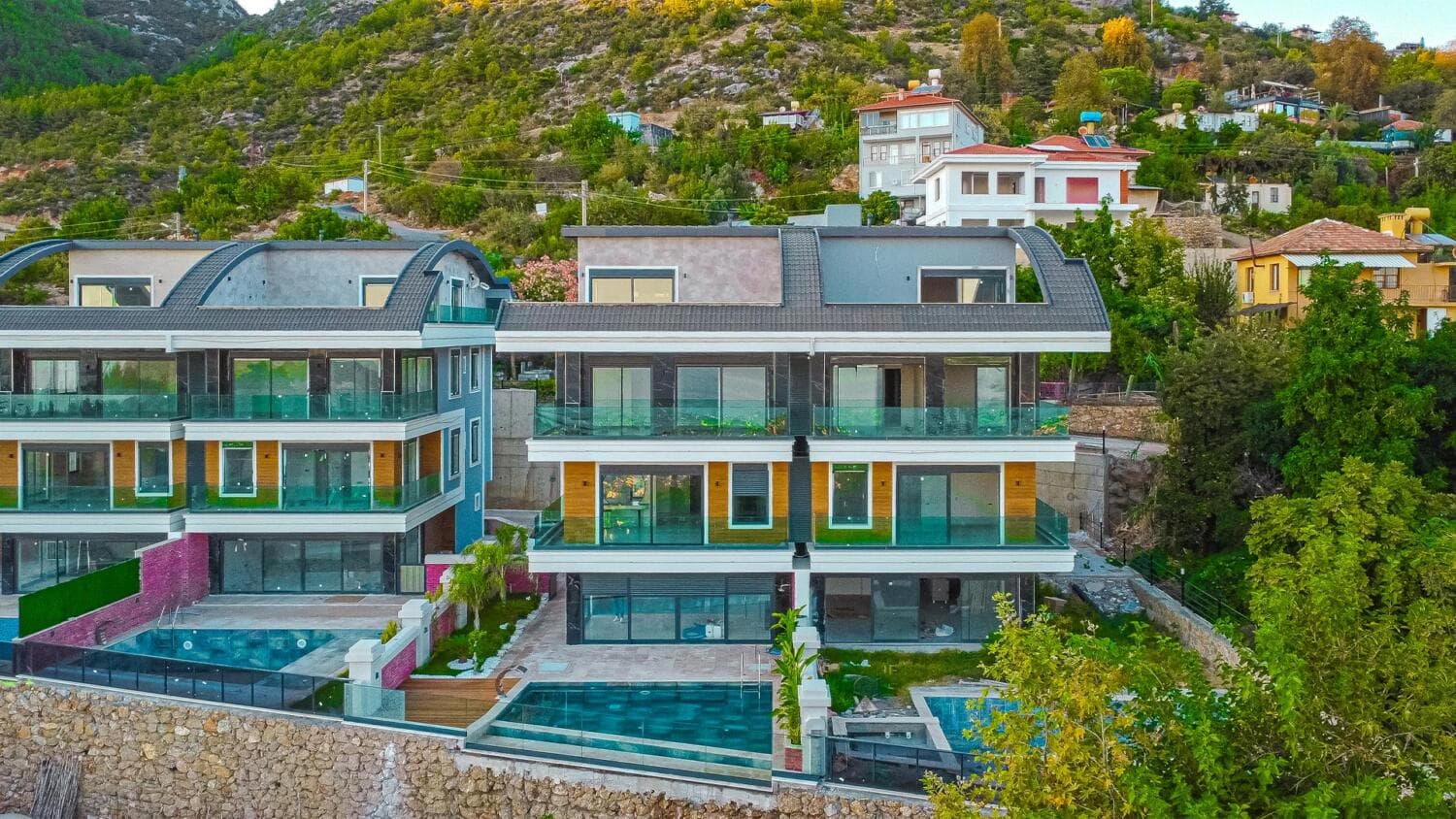 Turkey · AlanyaCompleted
Luxury villa with sea and castle views
Stunning 5+2 luxury villa with 450 m² in Tepe, Alanya, 4.5 km from Cleopatra Beach, featuring private pool, sauna, and panoramic sea and castle views.
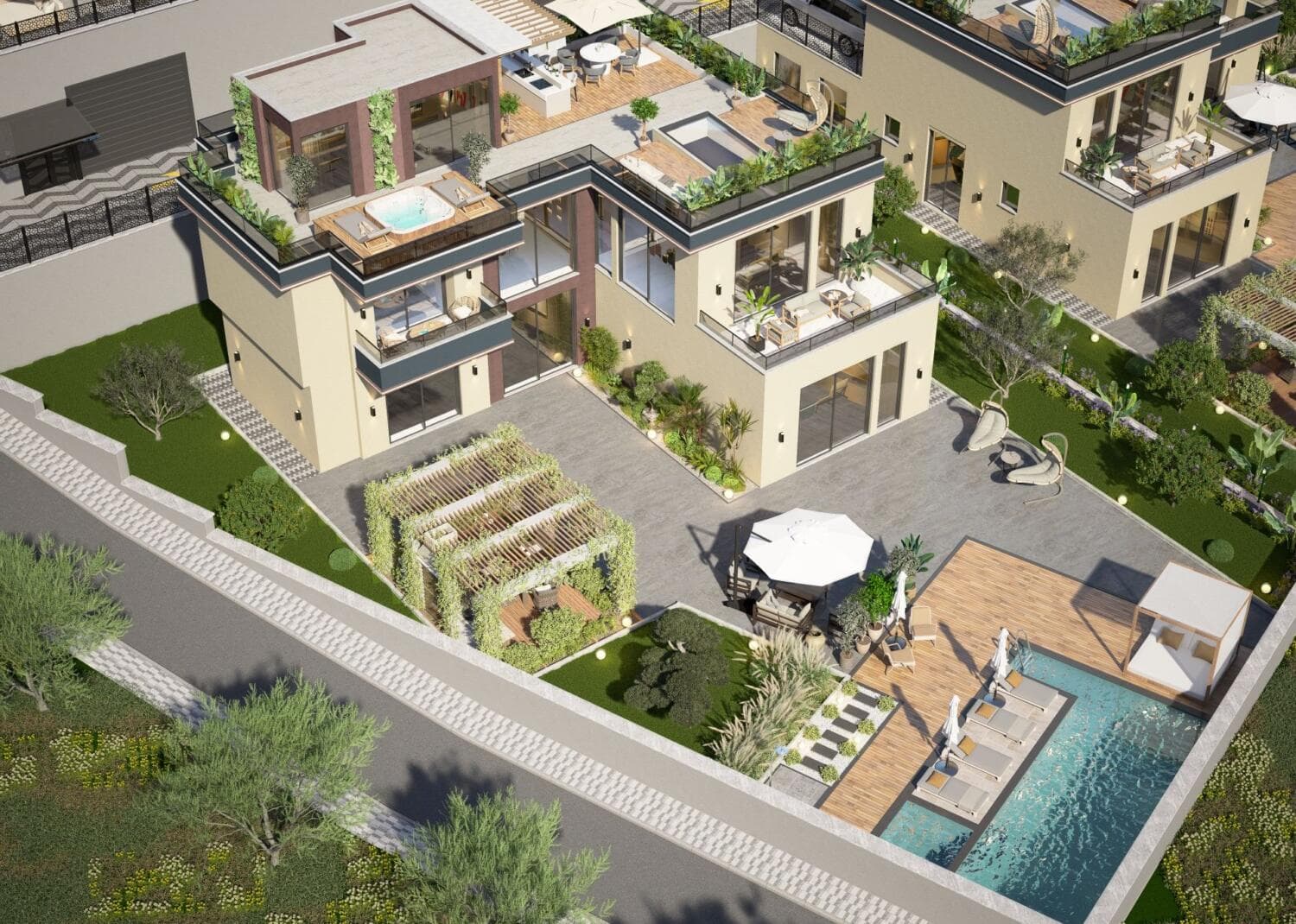 Turkey · AlanyaUnder construction
Seaview Villas on the Hillside of Alanya
Luxury villas with sea and mountain views on the hills of Kargicak near Alanya, featuring private pools and modern smart home systems.